The Two Forces of Every Ecosystem
Every thriving ecosystem depends on the perfect balance between the living (biotic) and non-living (abiotic) components. Most gardens fail because they only focus on one side of this equation.
Abiotic - The Foundation
The non-living infrastructure that supports all life
-
☀️
Solar Energy Capture
The primary fuel source for all ecosystem processes. Strategic placement determines where carbon gets stored.
🎯 Action: Map sun patterns across your yard to optimize plant placement💡 Pro Tip: Use a sun calculator app to track seasonal changes -
💧
Water Circulation System
The bloodstream of your ecosystem. Water carries nutrients, minerals, and information between all living components.
🎯 Action: Install swales, rain barrels, and natural drainage patterns💡 Science: 1 inch of rain = 623 gallons per 1,000 sq ft -
🪨
Mineral Matrix
Sand, silt, and clay particles create the physical structure that houses billions of microscopic organisms.
🎯 Action: Test soil composition and add organic matter to improve structure💡 Fact: 1 teaspoon of healthy soil contains more organisms than people on Earth
🔄 The Critical Connection
The magic happens at the intersection where biotic meets abiotic
Energy Flow
Solar energy captured by plants flows through the entire food web, powering all ecosystem processes
Nutrient Cycling
Minerals move from soil to plants to animals and back to soil through decomposition
Information Exchange
Living organisms communicate through chemical signals, creating a responsive, adaptive system
❌ Why Most Gardens Fail 85% Failure Rate
- • Focus only on abiotic inputs (fertilizer, water)
- • Ignore or kill beneficial soil organisms
- • No consideration for natural cycles
- • Treat symptoms, not root causes
✅ The Forest Floor Approach Nature's Way
- • Restore the living soil ecosystem first
- • Support natural nutrient cycles
- • Create habitat for beneficial organisms
- • Work with nature, not against it
The Soil Engine
Transform dead dirt into a living carbon sponge that feeds itself and grows more fertile every year.
🛠️ Tools & Materials Needed
Essential Tools
- ✓ Garden rake (no tilling!)
- ✓ Wheelbarrow or garden cart
- ✓ Garden hose with sprayer
- ✓ Soil thermometer
Materials Checklist
Stop All Tilling
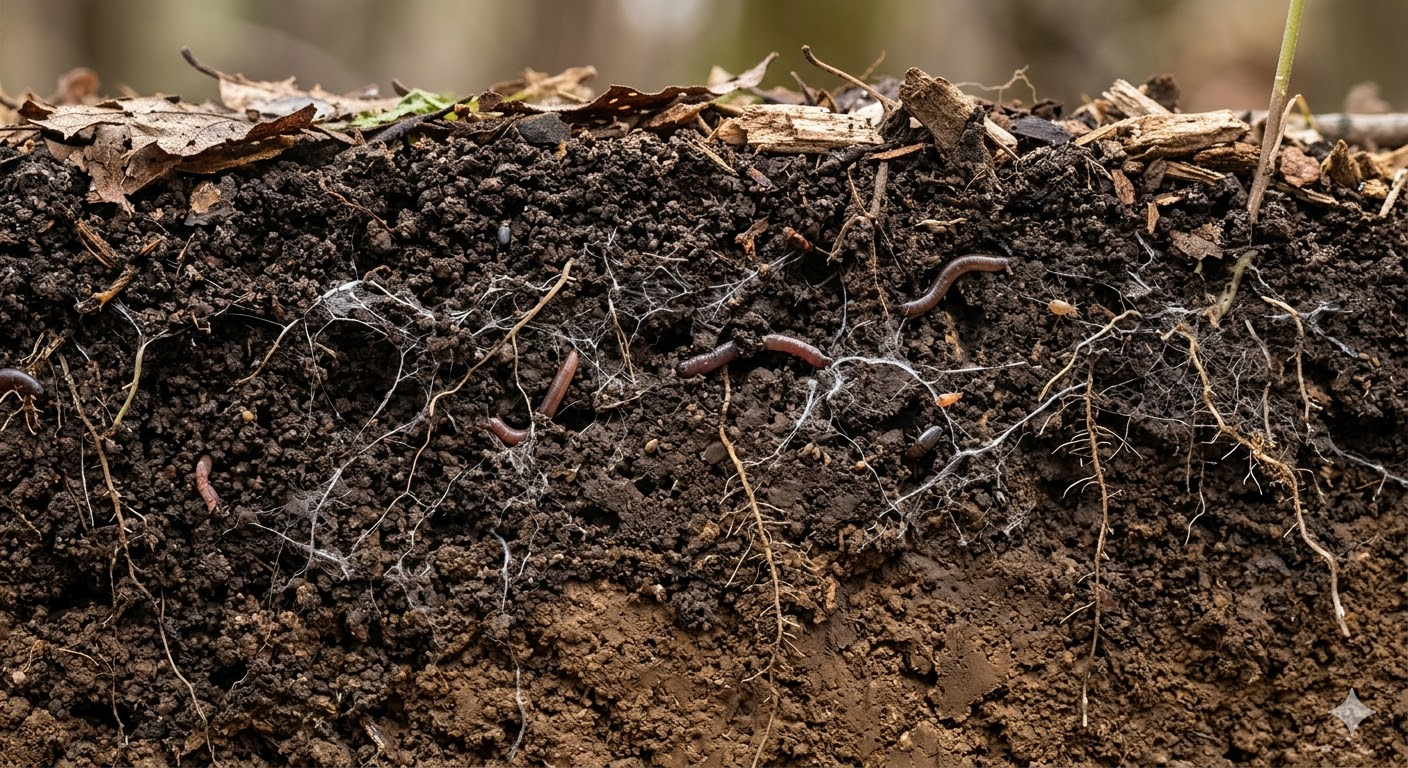
Every shovel turn destroys the fungal highways (mycelium networks) that plants depend on.
Bio-Charge the Surface
Gently rake Forest Floor Blend into the top inch of soil.
Deep Mulch Layer
Cover with 4 inches of wood chips to feed soil bacteria and retain moisture.
Phase 1 Timeline
🔧 Troubleshooting Common Issues
Solution: Add more wood chips, check drainage patterns
Solution: Use larger chip size, water lightly after application
Solution: Check soil pH (should be 6.0-7.5), ensure adequate moisture
✅ Signs Your Soil Engine is Working
- Earthworms appear in greater numbers
- Soil smells earthy, not sour
- White fungal threads visible in mulch
- Improved water infiltration
Ready to Build Your Soil Engine?
Start with Forest Floor Blend - the foundation of every thriving ecosystem
🌲 Get Forest Floor Blend - $50Biological Hardware
Install the physical systems that capture energy and manage waste before you plant a single seed.
Hydrology System
Capture and store rainwater while eliminating chlorine dependency
Materials Needed
Installation Steps
Wildlife Housing
Provide homes for beneficial insects and pest controllers
Materials Needed
Placement Guidelines
Waste Processing
Close the nutrient loop with on-site digestors
Materials Needed
System Setup
3-Day Installation Schedule
Day 1: Hydrology
- • Install rain barrels
- • Set up diverters
- • Test overflow system
Day 2: Housing
- • Mount bat houses
- • Install bee hotels
- • Place bird houses
Day 3: Processing
- • Build compost bays
- • Set up worm bins
- • Start first batch
🔧 Common Installation Issues
Hydrology Problems
Fix: Add larger overflow pipe, create bioswale
Fix: Add screen lid, use mosquito dunks
Wildlife Housing Problems
Fix: Check placement, wait 1-2 seasons
Fix: Adjust entrance sizes, relocate
The Aquatic Heart
A pond is the cooling system and the drinking station for your ecosystem's security team.
🧮 Pond Size Calculator
Small Ecosystem
- • Up to 1/4 acre yard
- • 150-200 gallons
- • $300-500 budget
- • Weekend project
Medium Ecosystem ⭐
- • 1/4 to 1/2 acre yard
- • 400-600 gallons
- • $600-900 budget
- • 2-3 day project
Large Ecosystem
- • 1/2+ acre yard
- • 800+ gallons
- • $1000+ budget
- • Week-long project
🛠️ Tools Needed
- ⚒️ Shovel & mattock for excavation
- 📏 Level & measuring tape
- 🚛 Wheelbarrow for soil removal
- ✂️ Utility knife for liner cutting
💰 Materials Cost (Medium Pond)
🏗️ 5-Step Installation Process
Mark & Dig
Layout pond shape with spray paint. Dig with gentle slopes (3:1 ratio)
Level & Line
Remove rocks/roots. Install underlayment, then EPDM liner
Add Substrate
Layer gravel on bottom, place river rocks around edges
Fill Slowly
Add water gradually, adjusting liner as you fill
Add Life
Plant aquatics, add beneficial bacteria, wait 2 weeks before fish
🌿 Natural Filtration Zones
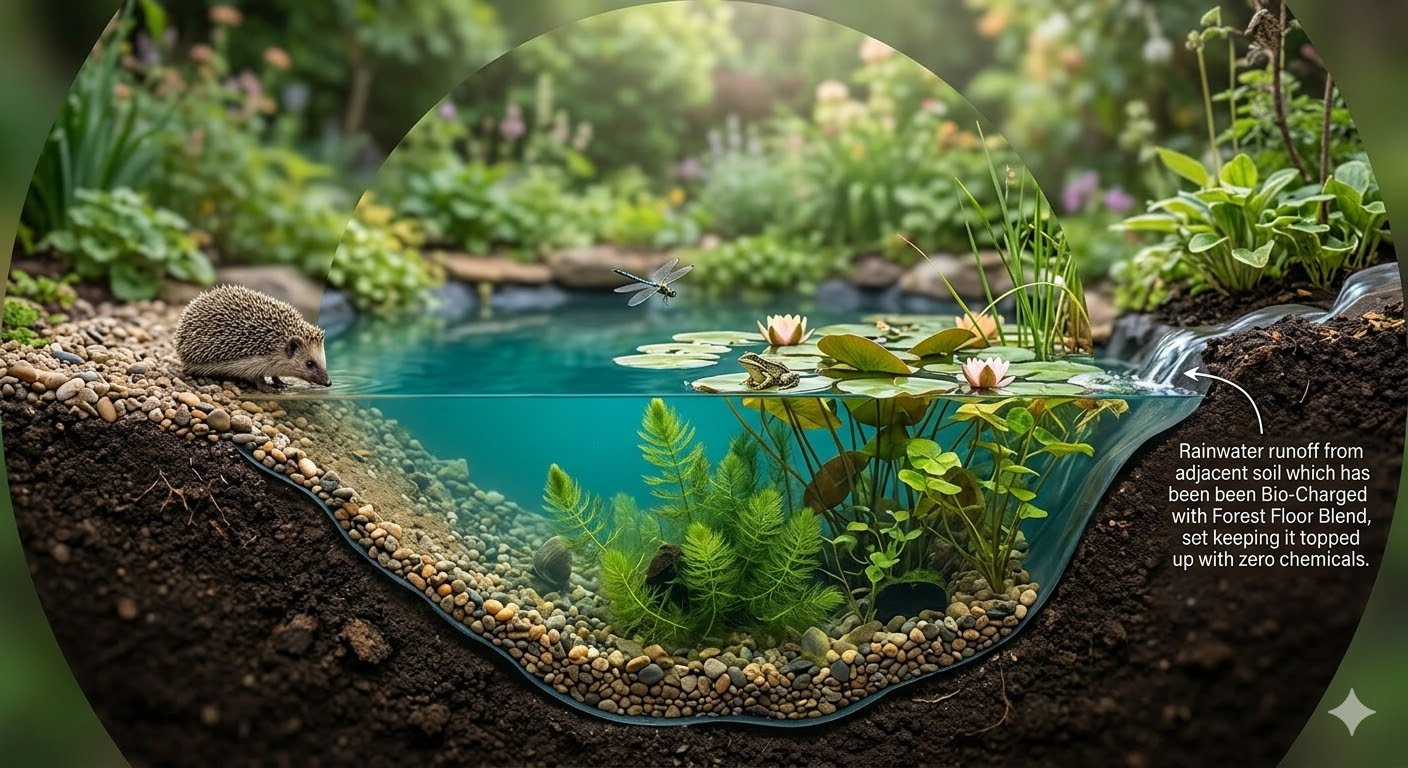
Deep Zone (18-24")
Thermal refuge for fish. Plant water lilies for surface coverage (30% max).
Shallow Zone (6-12")
Biological filter. Marginal plants remove excess nutrients.
Beach Zone (0-6")
Wildlife access point. Gentle slope for amphibians and birds.
📅 Seasonal Maintenance Schedule
🌸 Spring
- • Remove debris
- • Restart beneficial bacteria
- • Trim dead plant material
- • Check liner condition
☀️ Summer
- • Top off water weekly
- • Remove excess algae
- • Deadhead flowering plants
- • Monitor fish health
🍂 Fall
- • Net falling leaves
- • Cut back marginal plants
- • Reduce feeding fish
- • Prepare for winter
❄️ Winter
- • Keep hole open for gas exchange
- • Stop feeding fish
- • Monitor ice thickness
- • Plan next year improvements
🦋 Wildlife Arrival Timeline
Close the Loop
In a forest, nothing is wasted. Rot is just "future energy." Replicate this with an on-site digester that turns every scrap into black gold.
♻️ Zero Waste Systems Overview
Compost System
Hot composting for yard waste and kitchen scraps
Worm Processing ⭐
Premium castings from kitchen waste
Living Mulch
Ground covers that feed themselves
3-Bay Compost System
Materials & Setup
Filling Bay
Fresh materials, browns:greens 3:1 ratio
Cooking Bay
Active decomposition, 130-160°F, turn weekly
Harvesting Bay
Finished black gold, ready to use
Worm Casting Factory
Complete Worm Setup
Weekly Feeding Schedule
📅 Seasonal Processing Calendar
🌸 Spring
☀️ Summer
🍂 Fall
❄️ Winter
🔧 Common Processing Problems & Solutions
Compost Issues
Solution: Add nitrogen (greens), check moisture, turn more frequently
Solution: Too wet or too much nitrogen. Add browns, turn pile
Solution: Add browns, spread pile wider, reduce nitrogen
Solution: Bury food scraps, avoid meat/dairy, use proper ratios
Worm Bin Issues
Solution: Check moisture, pH, temperature. Reduce feeding temporarily
Solution: Bury food deeper, reduce moisture, add dry bedding
Solution: Check pH (6.0-7.0), avoid citrus/onions, maintain moisture
Solution: Chop food smaller, maintain 75-85°F, add more worms
📊 Your Environmental Impact
📋 Quick Reference: What Goes Where
Compost Pile
- ✅ Yard waste
- ✅ Vegetable scraps
- ✅ Coffee grounds
- ❌ Meat/dairy
- ❌ Pet waste
Worm Bin
- ✅ Fruit/veggie scraps
- ✅ Coffee grounds
- ✅ Eggshells (crushed)
- ❌ Citrus peels
- ❌ Onions/garlic
Direct to Garden
- ✅ Banana peels
- ✅ Tea bags
- ✅ Small woody prunings
- ❌ Large branches
- ❌ Diseased plants
Your Ecosystem Timeline
Week 1
Install hardware and apply Forest Floor Blend to soil
Week 4
First beneficial insects arrive, soil shows signs of life
Month 3
Wildlife returns, compost system fully active
Year 1
Fully self-sustaining ecosystem requiring minimal input
Start Your Living Ecosystem
Begin with Forest Floor Blend - the foundation for thriving, self-sustaining soil
The Mycelium Network
The underground fungal network that connects your entire garden ecosystem
Communication Network
Mycelium creates the "wood wide web" - a communication network that allows plants to share resources and warn each other of threats.
Nutrient Transport
Extends plant root systems by up to 1000x, dramatically improving water and nutrient uptake from soil.
Disease Protection
Creates protective barriers around roots and produces natural antibiotics that fight harmful pathogens.